ERW vs SSAW vs LSAW Pipe — Which Welded Pipe Should You Choose?
Welded steel pipe for oil, gas, water and structural projects is made by three fundamentally different processes — ERW, SSAW and LSAW. Choosing the wrong process means either paying for capacity you do not need or, worse, installing pipe that does not meet the pressure or standard requirement of your project. This comparison explains how each process works, where each type is used, and how the price differs at the same diameter, so you can specify the right pipe on the first order.
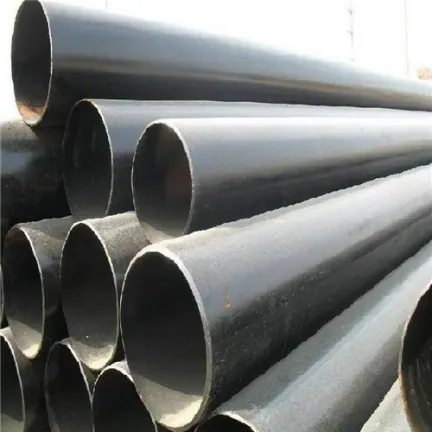
ERW, SSAW and LSAW production lines at Sino East Steel, Tianjin — diameters from 21.3 mm to 1,220 mm.
How the three processes work
ERW — Electric Resistance Welded pipe
ERW pipe is formed from a steel coil and welded by high-frequency electric resistance along the longitudinal seam. The weld is narrow, the surface is smooth, and the process is fast and economical in diameters from 21.3 mm up to about 660 mm. ERW pipe meets ASTM A53, API 5L and EN 10219 requirements and is the default choice for water lines, structural members, scaffolding and general engineering up to 16 mm wall thickness.
SSAW — Spiral Submerged Arc Welded pipe
SSAW (spiral welded) pipe is formed by spirally bending the coil so the seam runs helically along the pipe, then welding it by submerged arc. Because the forming line accepts coils of any width, SSAW is the most economical way to produce large diameters — from 219.1 mm up to 1,220 mm and beyond. The spiral seam is longer, but modern lines control weld quality with ultrasonic testing per API 5L. SSAW is widely used for water transmission mains, piling and low-to-medium pressure lines.
LSAW — Longitudinal Submerged Arc Welded pipe
LSAW pipe is formed from steel plate (not coil) by JCOE or UOE forming and welded with one or two longitudinal submerged-arc seams. It is the strongest and most dimensionally stable large-diameter welded pipe, used where pressure, wall thickness and toughness matter — gas trunk lines, offshore structures and high-pressure water systems. LSAW is available from 406.4 mm to 1,220 mm with wall thickness up to 25 mm and higher.
Comparison table at a glance
| Criterion | ERW | SSAW | LSAW |
|---|---|---|---|
| Diameter range | 21.3–660 mm | 219.1–1,220 mm | 406.4–1,220 mm |
| Seam direction | Longitudinal | Spiral (helical) | Longitudinal (1–2 seams) |
| Base material | Coil | Coil | Plate |
| Typical wall thickness | 1.0–16 mm | 6–25 mm | 6–40 mm |
| Pressure rating | Medium (API 5L PSL1/PSL2) | Medium | High (trunk lines, offshore) |
| Relative cost at Ø 500 mm | Not available at this size | 1.00 (baseline) | 1.15–1.25 |
| Standards | ASTM A53, API 5L, EN 10219 | API 5L, EN 10217 | API 5L, EN 10208, DNV |
| Best for | Water, structure, general engineering | Water mains, piling, low-pressure | Gas trunk lines, high pressure, offshore |
How the choice affects your cost
At the same outer diameter and grade, the cost ranking is almost always SSAW < LSAW < seamless, with ERW the cheapest option where the diameter fits. For a 500 mm water main, SSAW is typically 15–25% cheaper than LSAW because it starts from coil instead of plate; for a 1,000 mm gas trunk line, the pressure and toughness requirements rule out SSAW regardless of price. Freight also differs: SSAW and LSAW ship as bare pipe in bundles or loose, while ERW is often packed in hexagonal bundles that load more efficiently in containers.
Which pipe for which application
- Water supply and irrigation mains (DN300–DN1000): SSAW is the standard economical choice; specify API 5L or EN 10217 with hydrostatic testing per project.
- Building structures, scaffolding, fencing (up to DN200): ERW per EN 10219 or ASTM A53 — smooth surface, tight tolerances, low cost.
- Gas and oil trunk lines (DN400+): LSAW per API 5L PSL2 or EN 10208; specify impact testing for low-temperature service in Russia’s climate.
- Piling and foundation works: SSAW or LSAW with wall thickness 6–25 mm; confirm the soil corrosivity class and specify coating if required.
- High-pressure water or steam systems: LSAW or seamless per project standard; ERW is not recommended above its pressure rating.
What to specify when ordering
Send the application, standard (API 5L, ASTM A53, EN 10219/10217), grade (Gr.B, X42–X70, S235–S355), diameter, wall thickness, length, end preparation (plain, beveled, or with couplings) and required tests (hydrostatic, ultrasonic, impact). The factory confirms the process that fits the size and standard — for example, API 5L X60 in 610 mm OD is normally SSAW or LSAW, while X60 in 219 mm is ERW or seamless. Every shipment includes the EN 10204 3.1 mill certificate with heat numbers.
Frequently asked questions
Is ERW pipe as strong as seamless pipe?
For medium-pressure applications per ASTM A53 and API 5L PSL1, ERW pipe meets the same yield and tensile requirements as seamless. Seamless is specified where the weld seam is unacceptable — high-pressure boilers, extreme fatigue loads — and costs 20–40% more.
Why is SSAW cheaper than LSAW at the same diameter?
SSAW starts from coil, which is cheaper than plate, and the spiral forming line handles large diameters without plate edge preparation. LSAW requires plate with strict edge milling and JCOE forming — higher material and processing cost for higher pressure capability.
Can SSAW pipe be used for gas trunk lines?
Not normally. Gas trunk lines per API 5L PSL2 require longitudinal or seamless pipe with specified Charpy impact values; SSAW is used for water mains, piling and low-to-medium pressure service.
How do I confirm the weld quality of welded pipe?
Specify ultrasonic testing (UT) of the weld zone per API 5L or EN 10217, plus hydrostatic testing. The mill certificate reports the test results with the heat number for full traceability.
Get a comparison quote within 24 hours
Send your application and sizes to [email protected] or WhatsApp +86-186-2208-8833 — we will recommend the most economical process for your standard. See the welded pipe range and the API 5L line pipe range.