How Much Do Industrial Stainless Steel Sheets & Pipes Cost? Grade Selection (304, 316L, 321), ASTM A312 / A240 Standards & Sourcing Guide (2026)
An authoritative 2026 technical procurement whitepaper for chemical plant contractors, food processing engineers, oil & gas pipeline fabricators, and metal service centres: FOB China price benchmarks per metric tonne, PREN corrosion resistance calculation, austenitic vs duplex metallurgy (304, 316L, 321, 310S, 2205), ASTM A312 seamless vs welded pipe tolerances, surface finishes (2B, BA, No.4, 8K, EP), Positive Material Identification (PMI / XRF) spectrometer inspection, and complete 25-tonne mixed container landed cost calculation.
- 1. Key Cost Drivers in Industrial Stainless Steel (Sheets, Coils & Pipes)
- 2. 2026 FOB China Price Benchmarks (Per Metric Tonne)
- 3. Metallurgical Grade Selection: 304 vs 316L vs 321 vs 310S vs 2205 Duplex
- 4. Pitting Resistance Equivalent Number (PREN) & Acid Corrosion Engineering
- 5. Pipe Manufacturing Standards: ASTM A312, A213, A269, A358 vs A554
- 6. Surface Finish Specifications: No.1, 2B, BA, No.4, 8K Mirror & Sanitary EP
- 7. Worked Example: 25-Tonne Mixed Sheet & Pipe Container Landed Cost Breakdown
- 8. Mill Quality Control, PMI Spectroscopy & EN 10204 3.1 Certification
- 9. Seaworthy Export Packaging & Railway Container Protection
- 10. Frequently Asked Questions (FAQ)
- 11. Request a Formal Mill Quotation
1. Key Cost Drivers in Industrial Stainless Steel (Sheets, Coils & Pipes)
Unlike standard carbon steel, where iron ore and metallurgical coking coal drive price movements, the commercial price of austenitic, ferritic, and duplex stainless steel is predominantly governed by London Metal Exchange (LME) and Shanghai Futures Exchange (SHFE) raw alloy surcharges. In global B2B trade, quotation spreads between Chinese mills are driven by six core engineering factors:
| Cost Driver | Metallurgical / Process Function | Typical Impact on Price per Metric Tonne |
|---|---|---|
| 1. Nickel (Ni) & Molybdenum (Mo) Content | Primary austenite-stabilizing and acid-resistance elements (8.0–10.5% Ni in 304; 10.0–14.0% Ni + 2.0–3.0% Mo in 316L). | 316L carries an alloy premium of $850–$1,100/t over standard 304 due to the high market value of molybdenum and refined nickel cathodes. |
| 2. Seamless Pilgering vs Welded Tubing | Seamless extrusion & multi-pass cold pilgering vs continuous ERW/TIG/Laser welding from slit strip. | ASTM A312 seamless pipe commands a $250–$550/t premium over welded pipe; welded pipe offers tighter wall concentricity and lower tooling costs. |
| 3. Titanium / Niobium Stabilization (321 / 347) | Addition of Ti ($5 imes ext{C} min$) to tie up carbon and eliminate chromium carbide precipitation during 450–850°C thermal service. | Grade 321 adds $300–$450/t over 304; essential for petrochemical exhaust stacks, refinery boilers, and high-temperature expansion joints. |
| 4. Surface Finish Level (2B / BA / No.4 / 8K) | Cold-rolled bright annealing (BA in pure hydrogen atmosphere), satin belt polishing (No.4), or 8K optical mirror buffing. | BA finish adds $60–$120/t over 2B; 8K mirror polishing with 80 μm laser-cutting PVC protective film adds $150–$280/t. |
| 5. Hydrostatic & Non-Destructive Testing (NDT) | 100% inline Eddy Current (ET), Hydrostatic pressure test ($P = 2St/D$), Ultrasonic testing (UT), and Intergranular Corrosion (IGC ASTM A262 Practice E). | Specialized NDT testing (UT + IGC testing per lot) adds $40–$90/t; mandatory for pressure vessel and offshore oil & gas projects. |
| 6. Gauge & Outer Diameter Tolerances | Precision cold-drawn capillary / instrumentation tubes (ASTM A269) vs large-diameter heavy-wall welded pipes (ASTM A358 Class 1). | Thin wall ($t 15 ext{ mm}$) carry size-specific rolling reduction surcharges. |
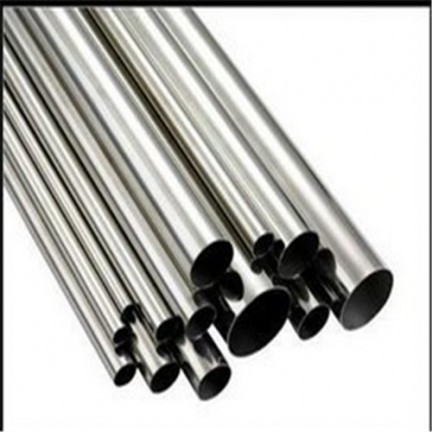
Figure 1: Heavy-duty ASTM A312 TP316L and TP304 stainless steel pipes in our Tianjin staging yard: pickling and passivated surface, deburred bevelled ends, plastic end caps, and steel strapped bundling.
2. 2026 FOB China Price Benchmarks (Per Metric Tonne)
The matrix below outlines baseline export price bands (FOB Tianjin / Shanghai / Ningbo Port) in October 2026 for commercial export orders with a minimum order quantity (MOQ) of 5 to 20 metric tonnes per item:
| Product Form & Standard | Grade & UNS Designation | Dimension / Wall Schedule | FOB China Benchmark (USD/t) |
|---|---|---|---|
| Cold Rolled Sheet / Coil (ASTM A240 / EN 10088) | 304 / 304L (UNS S30400 / S30403) | 0.5 – 3.0 mm × 1000/1219/1500 mm (2B / BA) | USD 1,950 – 2,250 |
| Cold Rolled Sheet / Coil (Acid-Resistant 2% Mo) | 316L (UNS S31603) | 0.5 – 3.0 mm × 1000/1219/1500 mm (2B) | USD 2,900 – 3,350 |
| Hot Rolled Plate (Industrial No.1 / HRAP) | 304 / 304L (UNS S30400) | 3.0 – 50.0 mm × 1500/2000 mm (No.1) | USD 1,880 – 2,150 |
| Hot Rolled Plate (High-Temperature Ti-Stabilized) | 321 / 1.4541 (UNS S32100) | 3.0 – 30.0 mm × 1500/2000 mm (No.1) | USD 2,350 – 2,700 |
| Heat-Resistant Plate (Refractory 1150°C) | 310S / 1.4845 (UNS S31008) | 2.0 – 25.0 mm × 1500/2000 mm | USD 4,100 – 4,800 |
| Seamless Industrial Pipe (ASTM A312 / A213) | TP304 / TP304L | 1/2″ – 12″ (SCH 10S, SCH 40S, SCH 80S) | USD 2,400 – 2,850 |
| Seamless Industrial Pipe (Molybdenum Acid-Grade) | TP316 / TP316L | 1/2″ – 12″ (SCH 10S, SCH 40S, SCH 80S) | USD 3,250 – 3,750 |
| Welded Industrial Pipe (ASTM A312 / A358 Class 1) | TP304 / TP304L (TIG/Plasma welded) | 1/2″ – 24″ (SCH 5S, SCH 10S, SCH 40S) | USD 2,150 – 2,500 |
| Welded Industrial Pipe (Acid-Resistant TIG) | TP316 / TP316L (100% Eddy Current) | 1/2″ – 24″ (SCH 10S, SCH 40S) | USD 2,950 – 3,350 |
| Ferritic Sheet (No-Nickel Decorative / Flue) | 430 (UNS S43000, 16–18% Cr) | 0.4 – 2.0 mm (2B / BA / No.4) | USD 1,150 – 1,350 |
3. Metallurgical Grade Selection: 304 vs 316L vs 321 vs 310S vs 2205 Duplex
Specifying the wrong stainless steel grade leads to catastrophic chloride stress corrosion cracking (SCC), severe pitting in marine atmospheres, or rapid intergranular embrittlement in heat recovery systems. Below is our engineering chemical composition and operational envelope matrix:
| Grade (AISI / EN / GOST) | Chemical Composition (Mass %) | Yield $R_{p0.2}$ / Tensile $R_m$ | Optimal Engineering Application & Limitations |
|---|---|---|---|
| 304 / 304L (1.4301 / 08Х18Н10) | Cr 18.0–20.0%, Ni 8.0–10.5%, C ≤ 0.030% (304L) | ≥ 205 MPa / ≥ 515 MPa | General food equipment, architectural facades, civil water piping, cryogenic storage. Unsuitable for marine splash zones or chloride environments > 200 ppm. |
| 316L (1.4404 / 03Х17Н14М3) | Cr 16.0–18.0%, Ni 10.0–14.0%, Mo 2.0–3.0%, C ≤ 0.030% | ≥ 220 MPa / ≥ 520 MPa | Marine equipment, chemical reactors, pharmaceutical process piping, paper pulp digesters, coastal architectural cladding. Resists chlorides up to 1,000 ppm. |
| 321 (1.4541 / 12Х18Н10Т) | Cr 17.0–19.0%, Ni 9.0–12.0%, Ti ≥ 5×C to 0.70% | ≥ 205 MPa / ≥ 515 MPa | Petrochemical furnace tubes, boiler superheaters, aircraft exhaust manifolds, continuous thermal cycling in the sensitization range (450–850°C). |
| 310S (1.4845 / 20Х23Н18) | Cr 24.0–26.0%, Ni 19.0–22.0%, C ≤ 0.08% | ≥ 205 MPa / ≥ 515 MPa | Refractory burner parts, kiln baffles, annealing furnace muffles, thermal incinerators up to 1,150°C in continuous oxidizing air service. |
| 2205 Duplex (1.4462 / 02Х22Н5АМ3) | Cr 21.0–23.0%, Ni 4.5–6.5%, Mo 2.5–3.5%, N 0.08–0.20% | ≥ 450 MPa / ≥ 655 MPa | High-pressure desalination plants, offshore oil platforms, subsea manifolds. Double the mechanical yield strength of 304/316 with extreme SCC resistance. |
4. Pitting Resistance Equivalent Number (PREN) & Acid Corrosion Engineering
In chemical engineering and marine procurement, resistance to localized pitting and crevice corrosion is quantitatively measured by the Pitting Resistance Equivalent Number (PREN) formula:
$$ ext{PREN} = % ext{Cr} + 3.3 imes % ext{Mo} + 16 imes % ext{N}$$
- Grade 304 ($ ext{PREN} pprox 18.0 – 20.0$): Suitable for potable water, indoor dairy tanks, and ambient non-saline atmospheric exposure.
- Grade 316L ($ ext{PREN} pprox 23.0 – 25.5$): Essential for marine coastal environments (within 5 km of sea coast), sulfur dioxide scrubbers, and industrial wastewater treatment.
- Grade 2205 Duplex ($ ext{PREN} pprox 34.0 – 36.0$): Required for high-temperature brine, reverse osmosis headers, and offshore hydrocarbon processing where PREN ≥ 32 is mandated by engineering standards.
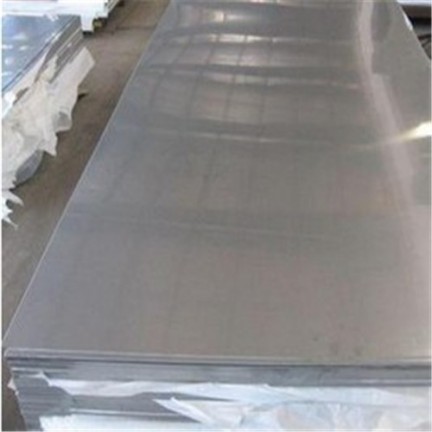
Figure 2: Prime cold-rolled stainless steel sheets (ASTM A240 Grade 304 2B) with blue laser protective film, interleaving paper, and heavy fumigated wooden export pallets.
5. Pipe Manufacturing Standards: ASTM A312, A213, A269, A358 vs A554
Ordering the correct ASTM specification is critical to avoid receiving ornamental tubing for pressure service or overpaying for boiler tube testing when standard piping is sufficient:
| Standard Spec | Product Type & Scope | Mandatory Quality & Pressure Testing | Typical Industry Use |
|---|---|---|---|
| ASTM A312 / A312M | Seamless, Straight-Seam Welded, and Heavily Cold Worked Welded Austenitic Stainless Steel Pipes. | 100% Hydrostatic ($P = 2St/D$) or non-destructive Eddy Current (ET), grain size verification, tensile & flattening tests. | High-temperature and general corrosive service piping in refineries, chemical plants, and municipal infrastructure. |
| ASTM A213 / A213M | Seamless Ferritic and Austenitic Alloy-Steel Boiler, Superheater, and Heat-Exchanger Tubes. | Hydrostatic / NDT, flaring test, flange test, hardness test (Rockwell B ≤ 90), microstructural grain size analysis. | Heat exchanger tube bundles, power plant boilers, condenser tubing, high-pressure steam lines. |
| ASTM A269 / A269M | Seamless and Welded Austenitic Stainless Steel Tubing for General Service. | Flaring, reverse flattening, hydrostatic, optional non-destructive electric test, smooth bright annealed bore. | Instrumentation impulse lines, pneumatic control lines, hydraulic tubing, food & beverage beverage transfer. |
| ASTM A358 / A358M | Electric-Fusion-Welded (EFW) Austenitic Chromium-Nickel Stainless Steel Pipe for High-Temperature Service. | Class 1 to Class 5: 100% Radiographic Examination (RT / X-ray) of circumferential and longitudinal weld seams. | Large bore piping (OD 8″ to 72″) for chemical reactors, power stations, and offshore gas processing. |
| ASTM A554 | Welded Stainless Steel Mechanical & Ornamental Tubing. | Dimensional inspection, weld visual check. No mandatory hydrostatic or pressure containment test. | Architectural handrails, balustrades, structural furniture, automotive exhaust trims, decorative frames. |
6. Surface Finish Specifications: No.1, 2B, BA, No.4, 8K Mirror & Sanitary EP
| Surface Code | Manufacturing Method | Surface Roughness ($Ra$) | Typical End-Use Scenario |
|---|---|---|---|
| No.1 (HRAP) | Hot rolled, annealed in continuous furnace, pickled in acid bath. Dull rough grey texture. | $Ra pprox 3.0 – 6.0 ext{ }mu ext{m}$ | Industrial tanks, structural framing, chemical reactors, paper pulp digesters where aesthetics are not required. |
| 2B | Cold rolled, heat treated, pickled, followed by a light skin-pass rolling with polished rolls. Semi-reflective grey. | $Ra pprox 0.1 – 0.5 ext{ }mu ext{m}$ | Universal baseline finish for pharmaceutical tanks, HVAC ducting, kitchen equipment, stamping blanks, laser cutting. |
| BA (Bright Annealed) | Cold rolled and heat treated in an inert pure hydrogen / nitrogen atmosphere. Highly reflective mirror-like. | $Ra pprox 0.05 – 0.2 ext{ }mu ext{m}$ | Home appliances, washing machine drums, surgical trays, solar reflectors, decorative automotive trim. |
| No.4 (Satin / Brushed) | Ground with 150–240 grit abrasive belts. Uniform unidirectional linear grain lines. | $Ra pprox 0.2 – 0.4 ext{ }mu ext{m}$ | Elevator doors, hotel escalators, commercial kitchen worktables, architectural cladding, restaurant hoods. |
| 8K (Optical Mirror) | Fine polishing with progressively fine polishing slurries and felt buffing wheels. Distortion-free optical reflection. | $Ra < 0.05 ext{ }mu ext{m}$ | Luxury architectural column cladding, security mirrors, art installations, high-end interior decoration. |
| Sanitary EP (Electropolished) | Anodic electrochemical dissolution removing microscopic peaks, leaving a chromium-rich ultra-smooth passivated layer. | $Ra le 0.38 ext{ }mu ext{m} ext{ (15 }mu ext{in)}$ | Biopharmaceutical WFI (Water For Injection) loops, semiconductor ultra-pure gas delivery, dairy sanitary piping. |
7. Worked Example: 25-Tonne Mixed Sheet & Pipe Container Landed Cost Breakdown
To demonstrate realistic landed cost mechanics, let us calculate a representative 25-tonne mixed export order shipped from Tianjin Port to a destination in Central Asia / CIS (e.g., Almaty / Dushanbe by rail, or St. Petersburg by sea) under 2026 freight conditions:
| Cost Component | Specification & Quantity | Unit Rate | Subtotal (USD) |
|---|---|---|---|
| Item 1: 304 2B Sheet (ASTM A240) | 1.5 mm × 1219 × 2438 mm, prime laser film | 10.0 tonnes @ $2,080 / t | $20,800.00 |
| Item 2: 316L ASTM A312 Seamless Pipe | 2″ SCH 40S (OD 60.3 mm × 3.91 mm × 6m), MTC 3.1 | 15.0 tonnes @ $3,450 / t | $51,750.00 |
| Total Material FOB Tianjin Port | 25.0 Metric Tonnes (1 × 20GP Container) | — | $72,550.00 |
| Direct Rail Freight / Ocean Freight | 20GP container Tianjin to destination station | Lump sum | $3,600.00 |
| Marine / Rail Cargo Insurance (All Risks) | $110% ext{ of CIF value} imes 0.25%$ | Premium rate | $190.00 |
| Total CIP / CIF Port of Arrival | Cargo + Freight + Insurance | — | $76,340.00 |
| Import Customs Duty (0% with ST-1 Certificate) | CIS Free Trade Agreement (CT-1 origin certificate) | 0% preferential tariff | $0.00 |
| Customs Clearance, Brokerage & Port Handling | Terminal handling, declaration fees, veterinary/quarantine | Estimated local fees | $450.00 |
| Total Landed Cost (Excluding VAT) | Total delivered to buyer yard | $76,790.00 ($3,071.60 / tonne average) | $76,790.00 |
8. Mill Quality Control, PMI Spectroscopy & EN 10204 3.1 Certification
The primary commercial risk in cross-border stainless steel trading is fraudulent grade substitution (e.g., supplying 201 J1 instead of 304, or passing off 304 as 316L). Sino East Steel Group enforces a 5-stage laboratory verification protocol for every export heat:
- 1. Handheld XRF Spectrometer (Positive Material Identification – PMI): 100% of sheets, pipes, and master coils undergo on-site X-ray fluorescence testing. Chemical readings for $ ext{Ni} ge 8.00%$ and $ ext{Mo} ge 2.00%$ must verify on digital readouts before packing.
- 2. Intergranular Corrosion Testing (ASTM A262 Practice E / GOST 6032): Sensitized specimens boiled in acidified copper sulfate ($H_2SO_4 + CuSO_4$) for 24 hours, followed by 180° bend testing to guarantee zero intergranular cracking.
- 3. Hydrostatic & Eddy Current Testing: 100% of ASTM A312 seamless and welded pressure pipes undergo continuous Eddy Current defect detection and hydrostatic pressure testing ($P = 2St/D$, minimum 5 seconds hold time).
- 4. Dimensional & Wall Concentricity Check: Ultrasonic thickness gauges verify OD and wall tolerance within $pm 10%$ of ASTM A530 requirements.
- 5. Original Mill Test Certificate (EN 10204 3.1): Each batch ships with stamped MTCs recording exact ladle chemical analysis, mechanical yield, tensile elongation, hardness, and NDT test outcomes.
9. Seaworthy Export Packaging & Railway Container Protection
Stainless steel sheets and pipes are vulnerable to surface abrasion, water staining (white rust), and transit impact. Our packaging standards include:
- Stainless Sheets & Plates: Surface protected by 70–100 μm laser-cutting PVC/PE film, neutral wood-free interleaving paper between sheets, wrapped in heavy waterproof craft paper and galvanized steel protective corner shrouds, strapped to ISPM-15 heat-treated fumigated wooden skids.
- Stainless Pipes: Bundled in rigid hexagonal packs with multiple heavy-duty steel bands. Both pipe ends fitted with heavy plastic caps to protect beveled weld preps. Bundles wrapped in woven plastic canvas for sea transit.
- Container Stuffing & Desiccant: 20GP containers fitted with heavy timber cross-bracing and 1.0 kg silica gel moisture-absorbing bags to prevent condensation during oceanic or Eurasian rail transit.
10. Frequently Asked Questions (FAQ)
What is the main difference between 304 and 316L stainless steel?
The key difference is the addition of 2.0% to 3.0% Molybdenum (Mo) and higher Nickel (10.0–14.0% vs 8.0–10.5%) in Grade 316L. Molybdenum significantly elevates the Pitting Resistance Equivalent Number (PREN) from ~19 in 304 to ~24 in 316L, rendering 316L highly resistant to chlorides, marine salt spray, sulfuric acid, and pitting corrosion. 316L costs approximately $850–$1,100 per tonne more than 304.
When should I specify seamless pipe (ASTM A312) vs welded pipe?
Seamless pipe is required for extreme high-pressure applications ($> 100 ext{ bar}$), critical cryogenic piping, nuclear systems, and sour hydrocarbon service where weld joint factor ($z = 0.85$ or $1.0$) constraints apply. For low to medium pressure chemical distribution, water treatment, and food processing, welded pipe produced to ASTM A312 / A358 with 100% Eddy Current / Radiographic testing offers equal corrosion resistance, superior wall thickness uniformity, and saves $250–$550 per tonne.
How do you guarantee that Grade 316L is not mixed with 304 during manufacturing?
Sino East Steel Group performs Positive Material Identification (PMI) on 100% of finished coils, sheets, and pipes using calibrated handheld XRF spectrometers before dispatch. Each heat is documented with an original EN 10204 3.1 Mill Test Certificate stating exact Ni, Cr, and Mo percentages, and customers are welcome to appoint third-party inspectors (SGS, Bureau Veritas, TUV) for pre-shipment testing.
What is the minimum order quantity (MOQ) for stainless steel pipes and sheets?
Our standard MOQ is 2 to 5 metric tonnes per size for standard stock specifications, and 25 metric tonnes (one 20GP container) for customized rollings or mixed product containers. For new commercial partners, we support multi-product mixed container consolidation (sheets + pipes + coils) to optimize ocean or railway freight costs.
Can you supply Russian GOST equivalent grades (12Х18Н10Т, 08Х18Н10, 03Х17Н14М3)?
Yes. We regularly manufacture and supply dual-certified stainless steel according to both international ASTM/EN standards and Russian GOST standards (ГОСТ 5632-2014, ГОСТ 9941-81, ГОСТ 7350-77) with full Russian-language MTC 3.1 and CT-1 origin certificates for 0% customs duty in CIS countries.
Request a Direct Factory Stainless Steel Quotation (24h Turnaround)
Submit your project specifications (grades, product type, dimensions, quantity, and destination port/station). Our metallurgists and export managers will calculate a firm CIF / FOB / DAP quotation with complete MTC 3.1 and freight estimates within 24 hours.
🏭 Stainless Steel Direct Manufacturing & Export Hub:
- Flat products & sheet inventory: Work directly with our China 304L/316L Stainless Steel Sheet Manufacturer facility (Cold Rolled 2B/BA, Hot Rolled No.1).
- Industrial piping & tubulars: Check availability from our Stainless Steel 316 Pipes & Square Tube Wholesaler division with MTC EN 10204 3.1.